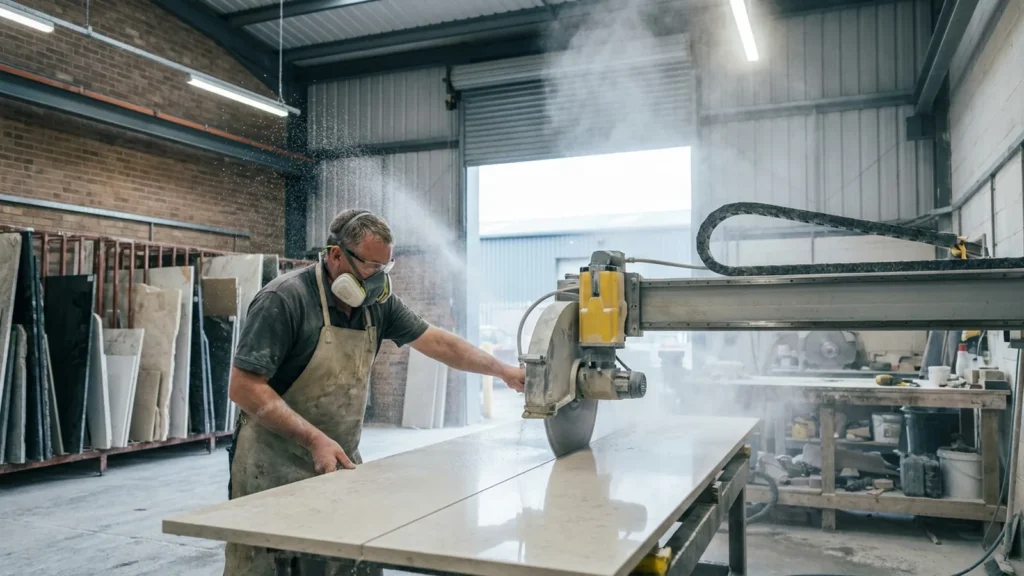
Workers in the Newcastle upon Tyne shipyards were exposed to asbestos, dust, welding fumes, extreme noise, industrial chemicals and heavy manual labour. The illnesses that followed most often are asbestosis, mesothelioma, asbestos-related lung cancer, diffuse pleural thickening, chronic obstructive pulmonary disease, occupational asthma, noise-induced hearing loss, tinnitus, dermatitis and chronic musculoskeletal injury. Most of these can still be claimed for today, decades after the exposure and even where the shipyard itself closed long ago.
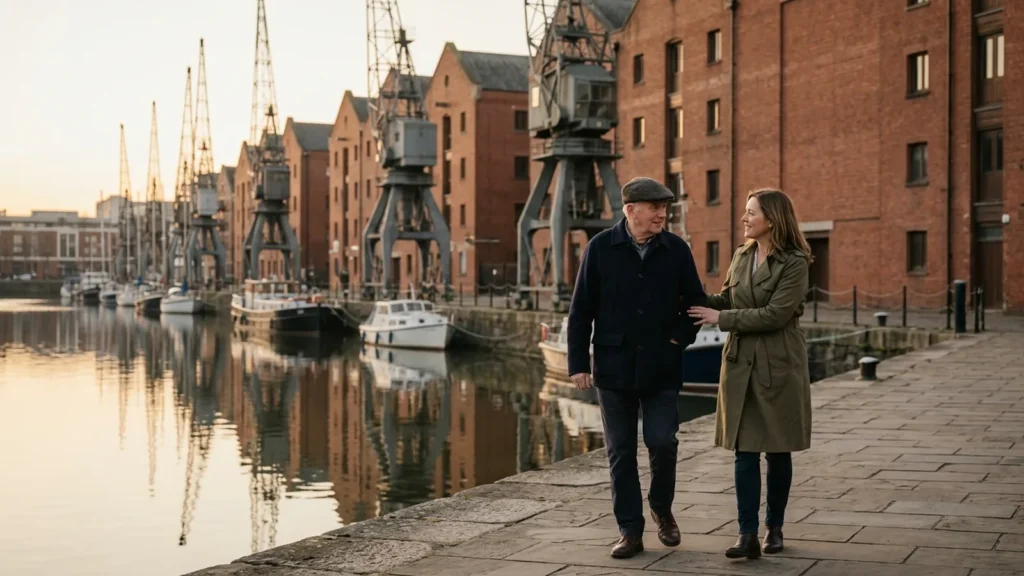
For more than a century, the shipbuilding industry on the River Tyne was one of the most important employers in Newcastle upon Tyne and the surrounding area. Thousands of men worked in shipyards, engine shops, boiler works and repair facilities, helping to build some of the world’s most famous ships. While the industry brought employment and prosperity to the region, it also exposed workers to dangerous materials and harsh working conditions, leading to a range of serious industrial illnesses.
What industrial diseases did Newcastle shipyard workers develop?
Former shipyard workers on the Tyne most commonly developed asbestos-related diseases, long-term respiratory conditions, noise-induced hearing loss, skin conditions and chronic musculoskeletal injuries. The table below sets out each condition, how long it typically takes to appear, and whether compensation can usually be claimed.
Industrial diseases among former Tyne shipyard workers
| Condition | What it is | Typically appears | Claimable |
|---|---|---|---|
| Asbestosis | Scarring of the lung tissue itself, causing breathlessness and reduced lung function | 20 to 40 years after exposure | Yes |
| Mesothelioma | An aggressive cancer of the lining of the lungs, almost exclusively caused by asbestos | 20 to 50 years after exposure | Yes |
| Asbestos-related lung cancer | Lung cancer caused by prolonged inhalation of asbestos fibres | 15 to 35 years after exposure | Yes |
| Diffuse pleural thickening | Extensive scarring of the lung lining that restricts how far the lung can expand | 15 to 40 years after exposure | Yes |
| COPD and chronic bronchitis | Long-term airway damage from dust, smoke and welding fumes | Develops gradually with exposure | Often |
| Occupational asthma | Asthma caused or made worse by substances breathed in at work | Months to years after exposure | Often |
| Noise-induced hearing loss | Permanent damage to the inner ear from sustained loud noise | Gradual, often noticed after retirement | Yes |
| Tinnitus | Persistent ringing or buzzing in the ears, frequently alongside hearing loss | Gradual | Yes |
| Dermatitis | Skin inflammation from contact with oils, solvents and cleaning chemicals | Weeks to years after contact | Often |
| Musculoskeletal injury | Chronic back, joint and repetitive strain injury from heavy manual work | Builds over years | Sometimes |
Swipe sideways to see the whole table
Why was asbestos used in shipbuilding on the Tyne?
Asbestos was used throughout shipbuilding because it resists heat and insulates efficiently, which made it the standard material around boilers, pipes, engine rooms and bulkheads. Workers involved in construction, maintenance and repair frequently handled asbestos-containing materials, often inhaling microscopic fibres without any protection at all.
The scale of the risk to this particular trade is measurable. According to the Health and Safety Executive’s Asbestos-related disease statistics, Great Britain 2026, published in July 2026, boat and ship builders and repairers had a proportional mortality ratio for asbestosis of 648 between 2011 and 2020. That is around six and a half times the average across all occupations, and the second highest figure recorded for any occupation.
Which asbestos-related diseases affect former shipyard workers?
Four asbestos-related conditions account for most claims by former shipyard workers. All four typically appear decades after the exposure that caused them.
Asbestosis
A chronic lung disease caused by scarring of lung tissue, resulting in breathlessness and reduced lung function. Read more about
Mesothelioma
A rare but aggressive cancer affecting the lining of the lungs, almost exclusively linked to asbestos exposure. Read more about
Asbestos-related lung cancer
A potentially fatal disease associated with prolonged inhalation of asbestos fibres. Read more about asbestos-related lung cancer.
Diffuse pleural thickening
Extensive thickening and scarring of the lining of the lungs, which can restrict lung expansion and cause significant breathing difficulties. Read more about diffuse pleural thickening.
Because asbestos-related diseases can take decades to develop, many former shipyard workers continued to receive diagnoses long after the decline of shipbuilding on the Tyne. WE Solicitors have acted for many former workers who contracted an asbestos-related disease while working in shipyards. If breathlessness has been put down to age or smoking, our article on shipyard asbestos and breathing problems is worth reading.
What respiratory diseases did shipbuilding cause?
Beyond asbestos, shipbuilders developed chronic bronchitis, occupational asthma, chronic obstructive pulmonary disease and long-term respiratory irritation. These were caused by dust, smoke and fumes generated by welding, grinding, cutting and painting operations, often in confined spaces below deck where there was no extraction and little ventilation.
Many workers experienced breathing difficulties that continued throughout retirement, and which were frequently attributed to smoking or ageing rather than to their working conditions.
Why is hearing loss so common among former shipyard workers?
Hearing loss is common among former shipyard workers because riveting, hammering, drilling and engine testing produced noise levels capable of causing permanent damage, and hearing protection was rarely provided before modern health and safety regulations. Long-term exposure led to permanent hearing loss, tinnitus and difficulty following conversation in later life.
Hearing impairment became one of the most common occupational conditions among former shipyard workers, and it remains one of the most commonly unclaimed. Read more about noise-induced hearing loss and permanent noise related hearing loss.
What skin and chemical conditions affected shipyard workers?
Shipyard workers regularly came into contact with paints, solvents, fuels, oils and cleaning chemicals, which caused dermatitis and skin irritation, eye irritation, headaches and dizziness from chemical vapours, and respiratory problems from fumes. In some cases prolonged exposure to hazardous chemicals contributed to more serious long-term health problems.
What musculoskeletal injuries did shipbuilding cause?
Shipbuilding involved demanding physical labour, and workers routinely lifted heavy materials, used powerful vibrating tools and worked in confined spaces aboard ships. This commonly resulted in chronic back pain, joint damage and arthritis, repetitive strain injuries and reduced mobility in later life. Where vibrating tools were involved, hand-arm vibration syndrome may also be claimable.
Can former shipyard workers still claim compensation?
Yes. Former shipyard workers can still claim compensation for industrial disease, and the great majority of successful claims are brought decades after the exposure took place. The five questions below determine whether a claim is possible.
The five questions that decide whether you can claim
| Question | What it means for a claim |
|---|---|
| Were you exposed at work? | Employment in a shipyard, engine shop, boiler works or repair facility is normally enough to establish exposure. |
| Did the employer fail to protect you? | Before modern regulations, protection was rarely provided. The absence of masks, extraction or ear defenders is itself evidence. |
| Do you have a diagnosis? | A medical diagnosis linking your condition to the exposure is needed. We can arrange specialist medical evidence. |
| Does the employer still exist? | It does not need to. Claims are met by the employer’s insurers, and historic policies can usually be traced. |
| Are you within the time limit? | Usually three years from the date you knew your illness was linked to work, which is generally the date of diagnosis, not the exposure. |
Swipe sideways to see the whole table
What if the shipyard has closed down?
A shipyard closing does not prevent a claim. Nearly all of the yards on the Tyne have long since closed, and this is the single most common reason former workers wrongly assume they cannot claim. Compensation is paid by the employer’s insurers rather than by the business itself, and specialist solicitors can trace employers’ liability policies dating back to the 1950s and 1960s.
How long do you have to make a claim?
In most cases, court proceedings must be started within three years of the date you first knew your illness was linked to your work. For industrial disease that is normally the date of diagnosis, not the date of exposure, which is why a claim can still be brought fifty years after the work took place. Where someone has died, the period generally runs for three years from the date of death. Read more about time limits for asbestos claims.
The legacy of Tyneside shipbuilding
The industrial illnesses experienced by Newcastle’s shipbuilding workforce reveal the human cost behind one of Britain’s most important industries. The experiences of these workers helped bring about improvements in workplace safety, protective equipment, occupational health monitoring and compensation schemes for those affected by industrial disease.
That legacy is still measurable. Health and Safety Executive figures show male asbestosis deaths in the North East ran at a standardised mortality ratio of 251.5 between 1981 and 2024, the highest of any region in Great Britain, from 1,399 deaths. Across Great Britain, around 5,000 people a year still die from asbestos-related disease, including 2,146 mesothelioma deaths in 2024.
Today, the history of industrial illness in the shipyards of Newcastle upon Tyne remains an important part of the region’s industrial heritage, serving as a reminder of both the remarkable achievements of the shipbuilding industry and the sacrifices made by those who worked within it.
Frequently asked questions
Can I claim if the shipyard closed decades ago?
Yes. Almost every shipyard on the Tyne has closed, and this does not prevent a claim. Compensation is paid by the employer’s insurers rather than the business itself, and specialist solicitors can trace historic employers’ liability policies going back to the 1950s and 1960s.
How long after working in a shipyard can a disease appear?
Asbestos-related diseases commonly take between 20 and 50 years to develop. It is normal to be diagnosed long after retirement, and a long gap between the work and the illness does not weaken a claim.
What if I do not have any employment records?
Most former shipyard workers do not. Employment history can usually be reconstructed from HM Revenue and Customs records, union records, pension records and witness evidence from people who worked alongside you.
Can I claim for hearing loss as well as a lung condition?
Yes. Separate conditions caused by the same employment are claimed together. Noise-induced hearing loss and tinnitus are frequently claimed alongside an asbestos-related illness.
Can I claim on behalf of a relative who has died?
Yes. Where a former shipyard worker has died from an industrial disease, the estate and certain dependants can bring a claim. Different time limits apply, so it is worth asking early.
Do I have to live in Newcastle to make a claim?
No. What matters is where the exposure happened, not where you live now. We act for former Tyneside shipyard workers who have since moved anywhere in England and Wales.
Will I have to go to court?
Almost certainly not. The large majority of industrial disease claims settle by negotiation. Proceedings are sometimes issued to protect a time limit, which is not the same as a trial.
What does it cost to make a claim?
We act on a no win, no fee basis in appropriate cases. There is nothing to pay upfront and nothing to pay if the claim does not succeed.
Speak to a specialist industrial disease solicitor
WE Solicitors is a specialist industrial disease practice. We act for former shipyard workers and their families across England and Wales, wherever the exposure took place and wherever you live now. You can read about how the claims process works, how much your claim is worth and cases we have settled.
WE Solicitors LLP is regulated by the Solicitors Regulation Authority, SRA number 445359. We are members of the Association of Personal Injury Lawyers and the Professional Negligence Lawyers Association.