Stockport’s hat works and textile mills exposed generations of workers to constant machine noise, fur and cotton dust, industrial chemicals and asbestos in the mill buildings themselves. The conditions that followed most often are noise-induced hearing loss, tinnitus, asbestos-related diseases, chronic respiratory conditions and dermatitis. Most of these can still be claimed for today, decades after the exposure and even where the works closed long ago.
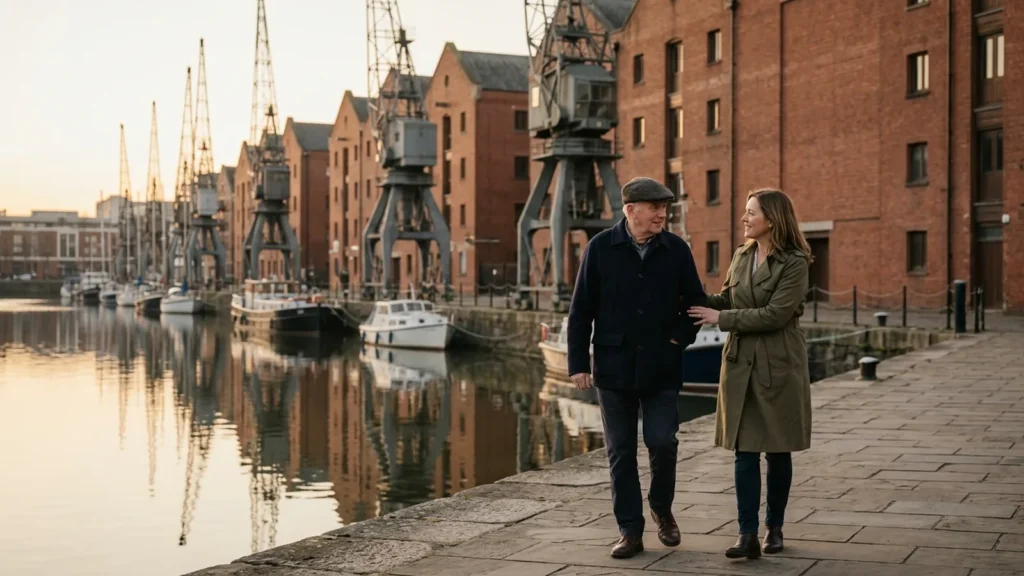
Fur felt hat-making concentrated in the Stockport area from the 17th century, and by the late 19th century the town’s hatting industry had grown large and prosperous, with hat works operating alongside the cotton spinning mills that shaped the town. Whole families worked in the trade, and the industry remained a major employer well into the 20th century. The work brought wages and pride, but it also brought noise, dust and chemicals that left many workers with lifelong health problems.
Why is hearing loss so common among former mill and hat works workers?
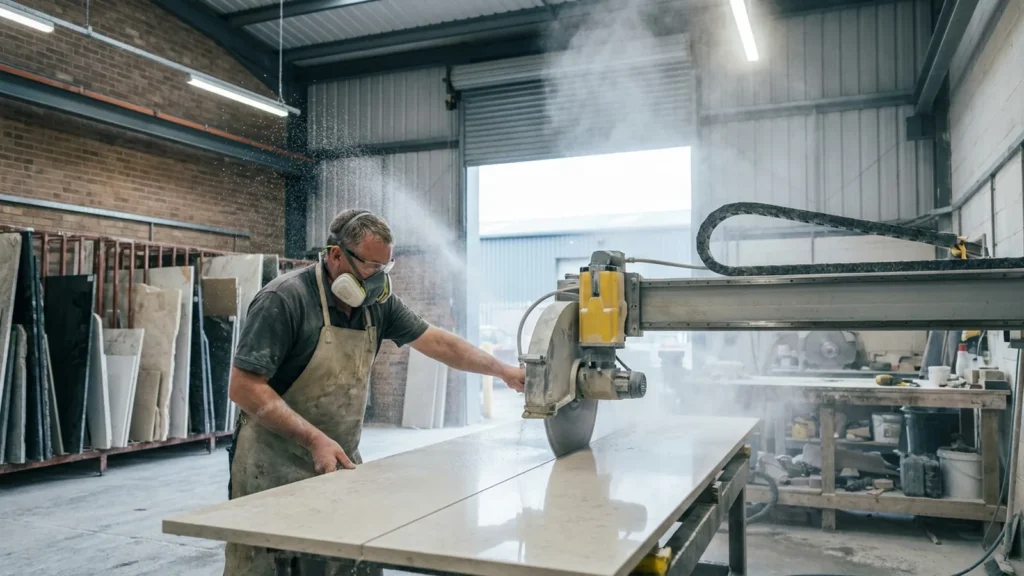
Hearing loss is common because the machinery ran at noise levels capable of causing permanent damage, for shift after shift, and hearing protection was rarely provided until late in the 20th century. In weaving and spinning sheds the noise was famously so intense that workers learned to lip-read across the floor. Blocking, forming and finishing machinery in the hat works produced sustained noise of its own.
The damage builds gradually, which is why many former workers only notice it in retirement: conversation becomes hard to follow in company, the television creeps louder, and a ringing or buzzing (tinnitus) refuses to fade. Across Great Britain the Health and Safety Executive estimates around 15,000 workers each year have hearing problems caused or made worse by work. Read more about noise-induced hearing loss claims and permanent noise related hearing loss, or see the textile industry page on our dedicated advice site, Hearing Loss Advice.
What does the phrase “mad as a hatter” have to do with Stockport?
The phrase comes from the felt hatting trade itself. For much of the industry’s history, mercury compounds were used in the “carroting” process that prepared fur for felting. Workers who breathed the vapour over the years developed tremors known as the hatters’ shakes, along with memory loss and other neurological symptoms. Mercury was eventually abandoned by the trade, and claims for mercury poisoning are now vanishingly rare, but the story matters because it shows a pattern Stockport knows well: the illness follows the industry, often by decades, and it is rarely the worker’s fault.
Was asbestos present in Stockport’s mills and hat works?
Yes. Asbestos was the standard insulation of industrial Britain, and the Health and Safety Executive advises that any building constructed or refurbished before the year 2000 should be assumed to contain it unless proven otherwise. In practice that meant lagging on steam pipes and boilers, insulating board in engine and boiler houses, and asbestos cement in mill roofs. Maintenance workers, engineers and anyone working near damaged lagging could inhale the fibres without ever knowing.
The North West carries one of the heaviest asbestos legacies in Great Britain. Health and Safety Executive figures published in July 2026 put the region’s male asbestosis death rate at 16.8 per million per year for 2022 to 2024, among the highest of any region, and record 1,922 asbestosis deaths in the North West between 1981 and 2024. Read more about asbestosis, mesothelioma and pleural thickening.
What conditions did Stockport’s industries cause?
Industrial diseases among former Stockport hat works and mill workers
| Condition | What it is | Typically appears | Claimable |
|---|---|---|---|
| Noise-induced hearing loss | Permanent damage to the inner ear from sustained loud machinery | Gradual, often noticed after retirement | Yes |
| Tinnitus | Persistent ringing or buzzing in the ears, frequently alongside hearing loss | Gradual | Yes |
| Asbestosis | Scarring of the lung tissue from asbestos fibres | 20 to 40 years after exposure | Yes |
| Mesothelioma | An aggressive cancer of the lung lining, almost exclusively caused by asbestos | 20 to 50 years after exposure | Yes |
| Diffuse pleural thickening | Scarring of the lung lining that restricts breathing | 15 to 40 years after exposure | Yes |
| COPD and chronic bronchitis | Long-term airway damage from cotton, fur and general mill dust | Develops gradually with exposure | Often |
| Occupational asthma | Asthma caused or made worse by substances breathed in at work | Months to years after exposure | Often |
| Dermatitis | Skin inflammation from dyes, solvents and finishing chemicals | Weeks to years after contact | Often |
Swipe sideways to see the whole table
Can former hat works and mill workers still claim compensation?
Yes. Compensation claims are met by the employer’s insurers rather than the business itself, so a works having closed decades ago is rarely the end of the matter. Specialist solicitors can trace historic employers’ liability policies and reconstruct employment histories from HM Revenue and Customs records, union records and witness evidence.
The five questions that decide whether you can claim
| Question | What it means for a claim |
|---|---|
| Were you exposed at work? | Employment in a hat works, mill or factory with sustained machine noise or asbestos is normally enough to establish exposure. |
| Did the employer fail to protect you? | Before modern regulations, protection was rarely provided. The absence of ear defenders, extraction or masks is itself evidence. |
| Do you have a diagnosis? | A medical diagnosis linking your condition to the exposure is needed. We can arrange specialist medical evidence, including hearing tests. |
| Does the employer still exist? | It does not need to. Claims are met by the employer’s insurers, and historic policies can usually be traced. |
| Are you within the time limit? | Usually three years from the date you knew your condition was linked to work, which is generally the date of diagnosis, not the exposure. |
Swipe sideways to see the whole table
How long do you have to make a claim?
In most cases court proceedings must be started within three years of the date you first knew your condition was linked to your work. For industrial disease that is normally the date of diagnosis, not the date of exposure, which is why claims are regularly brought forty or fifty years after the work took place. Where someone has died, the period generally runs for three years from the date of death. If you are unsure where you stand, ask us rather than assuming you are out of time. Read about how the claims process works and how much your claim is worth.
“The people we act for from the mills almost always say the same thing: everyone just put up with it. The noise, the dust, no protection. Putting up with it then does not mean you have to put up with it now.”
Frequently asked questions
Can I claim if the hat works or mill closed decades ago?
Yes. Claims are met by the employer’s insurers rather than the business itself, and specialist solicitors can trace historic employers’ liability policies going back decades.
I left the mills forty years ago. Is it too late?
Usually not. The three-year time limit generally runs from the date you knew your condition was linked to work, which is normally the date of diagnosis rather than the date of exposure.
How do I prove where I worked without any paperwork?
Most former mill workers have no paperwork. Employment history can usually be reconstructed from HM Revenue and Customs records, union and pension records, and witness evidence from people who worked alongside you.
Can I claim for hearing loss and a lung condition together?
Yes. Separate conditions caused by the same employment are claimed together. Noise-induced hearing loss and tinnitus are frequently claimed alongside respiratory or asbestos disease.
What if I also worked somewhere else noisy?
That is normal and does not prevent a claim. Responsibility can be shared between employers, and we deal with apportionment as part of the claim.
Can I claim on behalf of a relative who has died?
Yes. Where a former worker has died from an industrial disease, the estate and certain dependants can bring a claim. Different time limits apply, so it is worth asking early.
Will I have to go to court?
Almost certainly not. The large majority of industrial disease claims settle by negotiation. Proceedings are sometimes issued to protect a time limit, which is not the same as a trial.
What does it cost to make a claim?
We act on a no win, no fee basis in appropriate cases. There is nothing to pay upfront and nothing to pay if the claim does not succeed.
Speak to a specialist industrial disease solicitor
WE Solicitors is a specialist industrial disease practice based in Oldham, a few miles from Stockport. We have acted for mill and factory workers across Greater Manchester since 2001. You can read about cases we have settled and the industries we represent.
WE Solicitors LLP is regulated by the Solicitors Regulation Authority, SRA number 445359. We are members of the Association of Personal Injury Lawyers and the Professional Negligence Lawyers Association.
Sources
The figures and legal references on this page come from the following authorities, checked at the time of publication.
- Stockport Metropolitan Borough Council, Hat Works museum: the hatting industry (updated December 2024). https://www.stockport.gov.uk/exploring-the-museum/the-hatting-industry
- Health and Safety Executive, Noise induced hearing loss in Great Britain (data to 2024/25). https://www.hse.gov.uk/statistics/causdis/deafness/index.htm
- Health and Safety Executive, Asbestos-related disease statistics in Great Britain 2026 (published July 2026). https://www.hse.gov.uk/statistics/assets/docs/asbestos-related-disease.pdf
- Health and Safety Executive, guidance on presuming asbestos in pre-2000 buildings. https://www.hse.gov.uk/asbestos/duty/is-asbestos-present.htm