Silicosis compensation in the UK is worked out by looking at how much lung damage someone has, how much of it was caused by negligent exposure to silica dust at work, and what that damage costs them in lost income, care and future treatment. Most claims are settled by negotiation with an employer’s insurer rather than at trial, once medical and workplace evidence has been gathered and exchanged.
Silicosis is a form of pneumoconiosis, a scarring of the lungs, caused by breathing in fine particles of respirable crystalline silica (RCS), released when stone, concrete or brick is cut, ground, drilled or polished. It is incurable, but a properly evidenced claim can help fund care, equipment and lost earnings. This guide explains, in plain English, how a silicosis compensation claim is valued, negotiated and usually settled.
How is silicosis compensation worked out in the UK?
A silicosis compensation claim is valued in two parts: general damages for the injury itself (pain, breathlessness, loss of quality of life) and special damages for the financial losses that flow from it, such as lost earnings, care costs and equipment. A respiratory medical report, usually obtained by both sides, sets out the stage of the disease, its likely progression and its effect on daily life and work.
Because silicosis can worsen years after diagnosis, sometimes progressing towards more severe lung scarring or increasing the risk of lung cancer, a court can allow “provisional damages”: compensation now for the current condition, with the right to return for a further award if a specified, more serious stage later develops.
What trades carry the highest silica dust exposure risk?
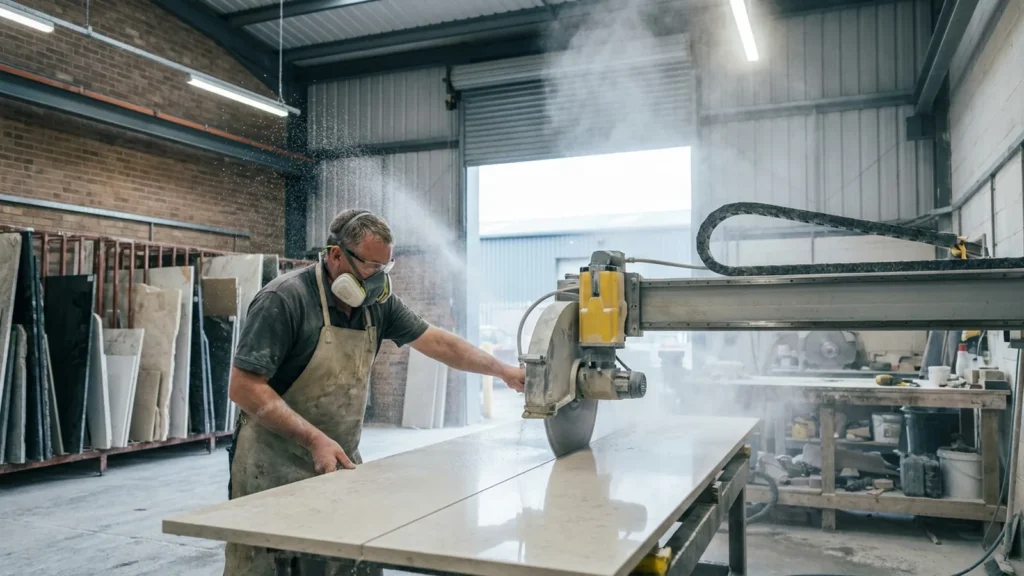
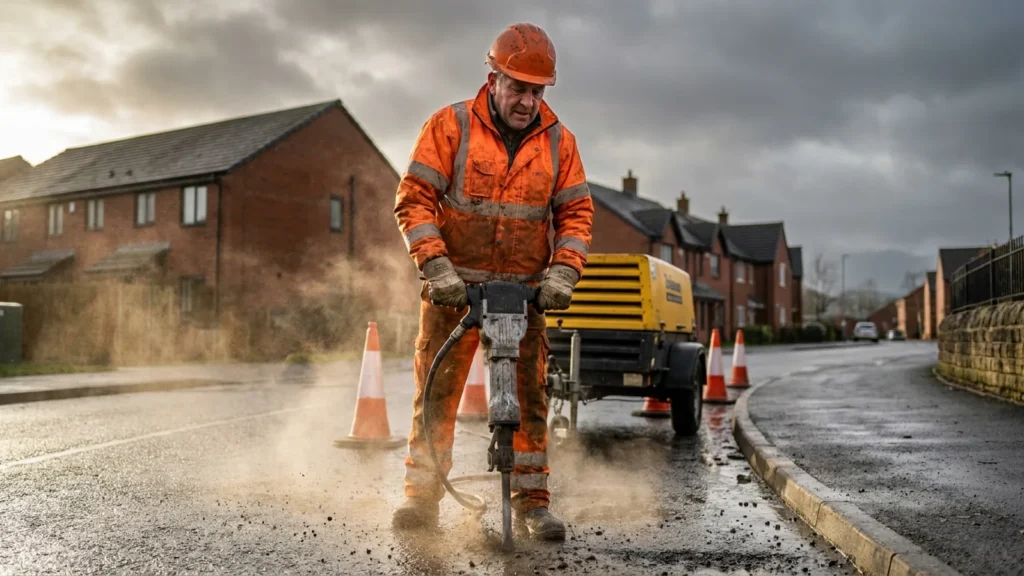
The Health and Safety Executive (HSE) identifies quarrying and slate work, foundries and potteries, stonemasonry, construction cutting or drilling of stone, concrete or brick, mining, rock drilling, sandblasting, tunnelling, and glass and ceramic work as trades where workers are exposed to RCS. HSE and clinicians have also highlighted a newer risk group: fabricators who dry-cut and polish engineered (artificial) stone worktops, a manufactured material with a very high silica content.
- Stonemasons and monumental masons
- Engineered stone (quartz) worktop fabricators and installers
- Quarry and slate workers
- Construction workers cutting, drilling or grinding concrete, brick or stone
- Foundry, pottery, brick and tile workers
- Sandblasters and tunnelling workers
The Control of Substances Hazardous to Health Regulations 2002 (COSHH) set a workplace exposure limit (WEL) for respirable crystalline silica of 0.1 mg/m³ as an 8-hour time-weighted average, confirmed by HSE, which employers must keep exposure below using measures such as wet cutting, on-tool extraction and respiratory protective equipment. HSE-commissioned research has previously estimated that silica exposure caused the deaths of more than 500 construction workers in 2005 from lung cancer alone, while provisional Office for National Statistics figures record 7 deaths registered in 2025 across England and Wales with silica pneumoconiosis as the underlying cause, a figure that reflects the disease’s long latency and likely undercounts the true toll of past exposure.
Why has engineered stone become a bigger concern for silicosis compensation claims?
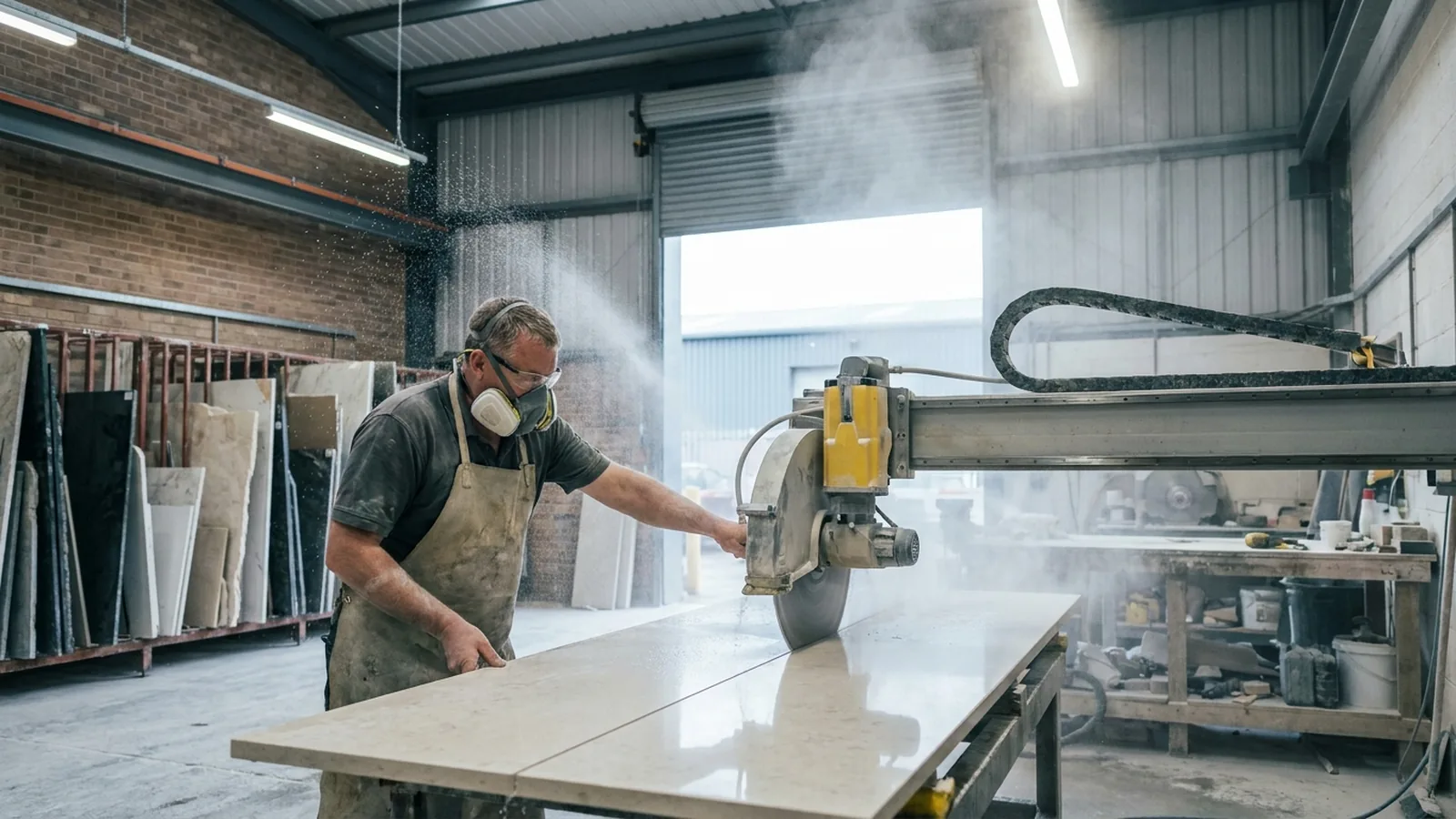
Engineered stone worktops are typically crushed quartz bound with resin and can contain a much higher proportion of silica than natural stone such as granite, so dry cutting, grinding or polishing without proper dust control releases very fine, concentrated dust. UK clinicians reported a cluster of at least eight men with silicosis linked to dry cutting and polishing artificial stone worktops, referred to a London hospital with a median age of just 34, according to reporting published by the British Safety Council in September 2025, far younger than workers historically affected by traditional stonemasonry. This strengthens the case, in claims involving this trade, that exposure controls were inadequate for a known, foreseeable risk, central to establishing negligence.
How do you claim for silicosis against a current or former employer?
A civil silicosis compensation claim has to show that an employer breached its duty of care, for example by failing to control dust, provide respiratory protection or carry out health surveillance, and that this exposure caused or materially contributed to the disease.
| Step | What happens |
|---|---|
| 1. Initial assessment | A solicitor reviews the work history and diagnosis to check whether a claim is likely to succeed and within the time limit. |
| 2. Exposure evidence | Job records, colleague evidence, site details and any HSE enforcement history are gathered to show where exposure occurred. |
| 3. Medical evidence | An independent respiratory specialist confirms silicosis, its likely cause and prognosis. |
| 4. Locating the employer or insurer | The Employers’ Liability Tracing Office traces the insurer if the employer has closed; a dissolved company can usually be restored so a claim can proceed. |
| 5. Multiple employers | Where exposure spanned more than one employer, liability can be apportioned by period and degree of exposure. |
| 6. Negotiation | Once evidence is exchanged, claims are negotiated and settled with the insurer without a trial. |
| 7. Settlement or judgment | Compensation is agreed, or rarely decided by a court, sometimes on a provisional basis if progression is possible. |
What does a silicosis compensation claim cover?
A successful claim reflects the full effect of the disease, not just the diagnosis. Depending on circumstances, this can include general damages for pain, suffering and loss of amenity; past and future loss of earnings if breathlessness has forced reduced hours or early retirement; care and daily assistance; travel and treatment costs; and aids or home adaptations such as oxygen equipment. Figures are calculated individually against medical evidence, so this article does not quote settlement amounts; a solicitor can explain how your case is likely to be valued once the medical picture is clear.
Can you get a no win, no fee silicosis claim?
Most silicosis solicitors, including WE Solicitors, act on a no win, no fee basis: no upfront legal cost, with a fee only payable if the claim succeeds. Alongside a civil claim, someone diagnosed with silicosis (prescribed disease D1, covering pneumoconiosis including silicosis) may also claim Industrial Injuries Disablement Benefit (IIDB), a state benefit that does not depend on proving negligence and, government guidance confirms, can qualify at a lower disablement threshold than most prescribed diseases. Where a civil claim genuinely cannot be pursued because the employer cannot be traced or insured, a lump sum may instead be available under the Pneumoconiosis etc. (Workers’ Compensation) Act 1979, a scheme built for exactly that situation.
How is a silicosis settlement usually reached, and how long does it take?
Once exposure and medical evidence are in place, a claim is sent to the employer’s insurer (or its traced successor) with a formal letter of claim. The insurer investigates and obtains its own medical evidence, and negotiations follow; the vast majority of silicosis claims settle this way, through correspondence and round table discussions, rather than at a contested trial. Because there is often a gap of ten years or more between exposure and diagnosis, tracing old records is frequently the slowest part, which is why gathering evidence early helps.
Time limits matter. Under the Limitation Act 1980, a personal injury claim usually has to be started within three years of the “date of knowledge”, the point someone first knew their illness was significant and linked to their work, which for a slow-developing lung disease is normally the date of diagnosis rather than exposure. If the person has died, the same three-year period generally runs from the date of death or the family’s date of knowledge, whichever is later.
“People often assume a silicosis claim means months of confrontation, but most are resolved through careful negotiation once the medical evidence is clear. Our job is to properly investigate the exposure history so nobody misses out on the support they are owed simply because a company changed hands or closed down years ago.”
Steve Evans, Senior Partner, WE Solicitors LLP
Frequently asked questions about silicosis compensation claims
Do I need to have worked with stone recently to claim?
No. Silicosis often develops decades after the exposure that caused it, so claims regularly involve work carried out long ago. What matters is showing, through work history and medical evidence, that negligent exposure caused or contributed to the disease.
What if the company I worked for no longer exists?
A dissolved company can usually be restored to the Companies Register, and the Employers’ Liability Tracing Office helps identify which insurer covered it, so closure does not automatically prevent a claim.
Can I claim if I was exposed to silica dust at more than one job?
Yes. Where exposure happened across several employers, each can potentially be pursued, with any settlement apportioned by the period and degree of exposure at each workplace.
Can I get compensation and state benefits at the same time?
Yes. IIDB and a civil compensation claim are separate systems, although any IIDB already paid is normally deducted from a civil award to avoid double recovery.
How much does it cost to start a silicosis claim?
With a no win, no fee agreement there is no upfront cost, and a fee is only payable if the claim succeeds. A free initial assessment establishes whether a claim is worth pursuing first.
Speak to a specialist silicosis solicitor
WE Solicitors has represented people affected by industrial disease since 2001, including stone and construction workers exposed to silica dust. If you or a family member has been diagnosed with silicosis and are unsure whether a claim is possible, our silicosis claims team can review the work history and medical evidence and explain what a claim might involve, including where your work also involved asbestos or other dust exposure.
Every case is assessed individually and free of charge, with no obligation to proceed. Call 0800 294 3065 to speak to a specialist, or complete our online enquiry form and we will call you back.
Sources: HSE, Silicosis: causes and risk controls; HSE, About work-related lung disease; HSE, Silica dust and cancer risk in construction; Office for National Statistics, Deaths caused by silicosis 2020 to 2025 (FOI release, published 6 February 2026); Department for Work and Pensions, Industrial Injuries Disablement Benefits: technical guidance; GOV.UK, Industrial Injuries Disablement Benefit; Pneumoconiosis etc. (Workers’ Compensation) Act 1979; Limitation Act 1980, section 11; British Safety Council, Artificial stone and the rise of silicosis (23 September 2025).