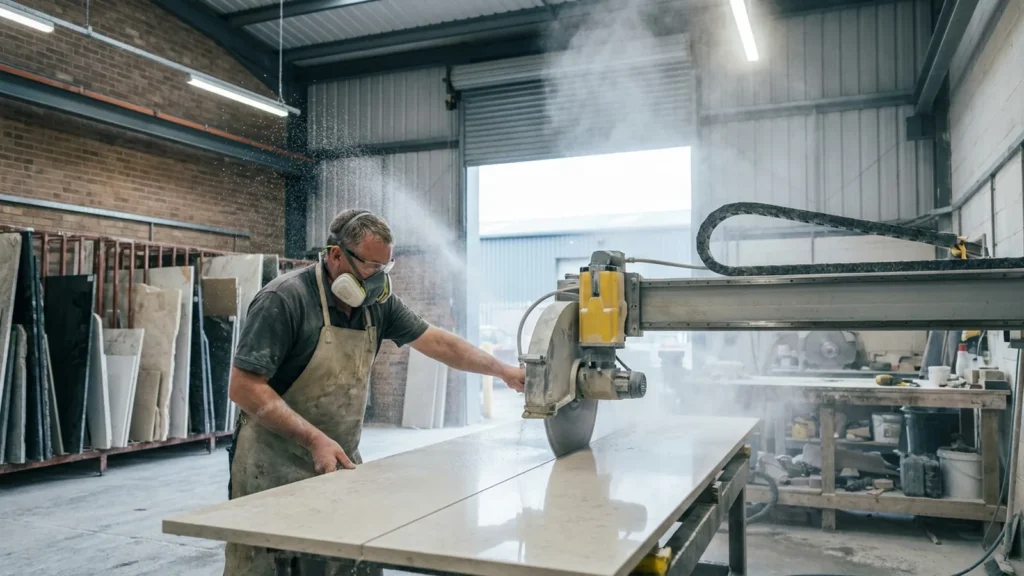

Yes. If you worked in a Sheffield or Rotherham steelworks, forge, rolling mill or grinding shop and now have hearing loss or tinnitus, you can usually still make a claim, even if you left the works decades ago. Noise damage is permanent, and the three-year time limit normally runs from when you first knew your hearing loss was linked to your work, which for many former steelworkers is the day an audiologist or GP tells them so. Compensation is paid by the insurer that covered your employer at the time, so it does not matter that most of the old works have closed.
This guide explains why so many South Yorkshire steelworkers lost their hearing, how to recognise noise damage, what the law expected employers to do, and how a hearing loss claim works from first phone call to settlement.
Why did so many Sheffield steelworkers lose their hearing?
Because steelmaking was one of the noisiest trades in Britain, and Sheffield did it on an enormous scale for three centuries. Steelmaking in the city was first recorded in 1692, and in the 1740s Benjamin Huntsman produced the first crucible cast steel, the foundation of the city’s world-renowned steel industry. By the early twentieth century the heavy works of the Lower Don Valley were rolling armour plate: the River Don Engine, built in 1905 and rated at 12,000 horsepower, drove a mill producing plate up to 40 centimetres thick. Downstream at Templeborough in Rotherham, a works built during the First World War became the largest steelworks in Europe and, once electric arc furnaces were installed in 1965, the largest electric steel plant in the world. It cast its last steel on 25 November 1993.
The noisiest jobs were in:
- Drop forges and hammer shops, where steam and pneumatic hammers struck hot billets many times a minute, producing impulsive noise far above today’s limits.
- Melting shops, with the constant roar of open-hearth and electric arc furnaces during charging and tapping.
- Rolling mills, with continuous noise from the mill stands, hot saws and roller tables.
- Grinding, fettling and dressing shops, where hand-held grinders and chipping hammers were used on castings and forgings for whole shifts.
- Cutlery, tool and saw making, where powered grinding and polishing added to the din of workshops across the city.
What are the signs of noise-induced hearing loss?
Noise-induced hearing loss (NIHL) is permanent damage to the hearing caused by repeated exposure to loud noise. It usually creeps up slowly, and many former steelworkers put it down to age for years. Common signs include:
- struggling to follow conversation in a pub, at a family gathering or anywhere with background noise
- turning the television up louder than others in the house would like
- feeling that people mumble, or often asking them to repeat themselves
- ringing, buzzing or hissing in the ears (tinnitus), which the NHS notes is often linked to some form of hearing loss
A hearing test tells the story. An audiogram (a chart of how well you hear at each pitch) of noise-damaged ears typically shows a dip at the higher pitches in both ears, a pattern that is different from ordinary age-related hearing loss. A medical expert can separate the part of your loss caused by noise at work from the part caused by age, and compensation reflects the part caused by work.
When should your employer have protected your hearing?
From 1963 at the latest. The courts usually treat the Ministry of Labour’s 1963 booklet Noise and the Worker as the point from which employers should have known that factory noise damaged hearing, so exposure in a Sheffield or Rotherham works from that date onwards can found a claim if hearing protection was not provided, not enforced or not explained. Employers have also owed a general duty under the Health and Safety at Work etc. Act 1974, followed by the Noise at Work Regulations 1989 and, today, the Control of Noise at Work Regulations 2005.
| Control of Noise at Work Regulations 2005 | Daily or weekly average | Peak (impulsive noise such as a hammer blow) | What the employer must do |
|---|---|---|---|
| Lower exposure action value | 80 dB(A) | 135 dB(C) | Assess the risk, give information and training, and make hearing protection available |
| Upper exposure action value | 85 dB(A) | 137 dB(C) | Put in place a programme to reduce noise, provide hearing protection and see that it is properly used |
| Exposure limit value | 87 dB(A) | 140 dB(C) | Must not be exceeded, taking account of any hearing protection worn |
How common is work-related hearing loss?
More common than the benefit statistics suggest. HSE estimates that around 15,000 workers a year in Great Britain had work-related hearing problems, based on Labour Force Survey data for 2022/23 to 2024/25, and 665 new cases of occupational deafness were assessed for Industrial Injuries Disablement Benefit between 2015 and 2024. That benefit uses a strict test, a measured loss of more than 50 dB in both ears, so many people with genuine industrial deafness never appear in the figures. A civil compensation claim does not use that threshold. It depends on medical evidence that your hearing was damaged by noise at work and that your employer failed to protect you.
How does a steelworker hearing loss claim work?
- Free assessment. You tell us where you worked, what you did and for how long, and what you notice about your hearing. There is no charge and no obligation.
- Work history. We piece together each employer and job with dates, using HMRC employment records, payslips, pension paperwork and former colleagues.
- Hearing test and medical report. An independent specialist tests your hearing and reports on whether noise at work caused the damage. We arrange and fund this.
- Tracing the insurer. Most of the old works have closed, merged or been dissolved. We trace the employer’s liability insurer through the Employers’ Liability Tracing Office and insurer archives, and a dissolved company can be restored to the register under section 1029 of the Companies Act 2006.
- Letter of claim and settlement. Most hearing loss claims settle without a court hearing. Compensation covers the hearing loss and tinnitus themselves, valued using the Judicial College Guidelines (18th edition, April 2026), plus financial losses such as the cost of hearing aids.
What is the time limit for a hearing loss claim?
Three years from your “date of knowledge”. Section 11 of the Limitation Act 1980 sets the three-year period, and section 14 defines the date of knowledge as when you first knew your injury was significant, that it was caused by your employer’s acts or omissions, and who the employer was. If you have only recently been told that your hearing loss is noise-related, you may well be in time even though you left the works in the 1980s or 1990s. If more time has passed, do not assume it is too late: the court has a discretion to allow some late claims, and the sooner you ask, the better your position.
“Former steelworkers often tell us that everyone on the shop floor went a bit deaf, so they assumed nothing could be done. That is exactly why the law required employers to protect them, and it has done since the 1960s. If the television keeps getting louder and your family says you never listen, it costs nothing to find out whether you have a claim.”
Steve Evans, Senior Partner, WE Solicitors LLP
Frequently asked questions
The works I was at closed years ago. Can I still claim?
Yes. The claim is against the insurer that covered the employer while you worked there, and that insurance does not disappear when the company closes.
I sometimes wore ear defenders. Does that stop me claiming?
Not necessarily. A claim can still succeed if protection was not provided for all the noisy work you did, did not fit or work properly, was not enforced, or came too late, after the damage had already been done.
Can I claim for tinnitus?
Yes. Where tinnitus was caused by noise at work it can be claimed for, either on its own or alongside hearing loss.
I worked for several steel firms. Who do I claim against?
A claim can be brought against more than one former employer, with responsibility shared between their insurers in proportion to the noise each exposed you to. We handle the tracing and the apportionment.
Could the steelworks have caused other illnesses too?
Possibly. The same works exposed people to asbestos on furnaces and steam pipes, silica dust from grinding and moulding sand, and vibration from grinders and chipping hammers. Our guide to industrial disease in Sheffield’s steel, forging and cutlery trades covers asbestos, silicosis and vibration claims as well as hearing loss, and our article on hand-arm vibration syndrome claims explains the symptoms of vibration damage.
Speak to a hearing loss solicitor about Sheffield steel work
WE Solicitors has handled industrial deafness and other industrial disease claims for workers across the North of England since 2001. We are regulated by the Solicitors Regulation Authority (SRA number 445359), members of the Association of Personal Injury Lawyers, and every hearing loss claim is run on a no win, no fee basis with a free initial assessment. If you worked in a Sheffield or Rotherham forge, melting shop, rolling mill or grinding shop and your hearing is not what it was, call 0800 294 3065 or complete our online enquiry form. You can also read more about our hearing loss claims service, permanent noise-related hearing loss and our noise-induced hearing loss FAQs.
Sources: Digital Humanities Institute, Steel City; Sheffield Museums, Benjamin Huntsman clock; Sheffield Museums, River Don Engine; Magna, Templeborough times: a brief history of the site; Magna, Templeborough after the Second World War; Control of Noise at Work Regulations 2005, regulation 4; regulation 7; regulation 8; HSE, Noise induced hearing loss statistics in Great Britain; NHS, Tinnitus; Limitation Act 1980, section 11; section 14; Companies Act 2006, section 1029; Employers’ Liability Tracing Office; Weightmans, The 18th edition of the Judicial College Guidelines, April 2026.